

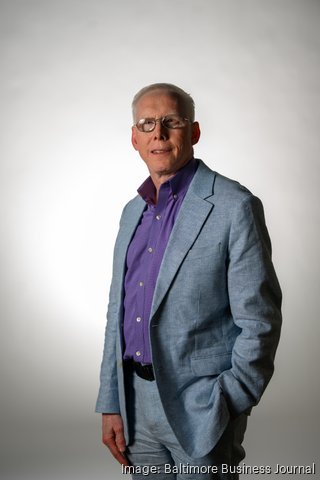
BISM President and CEO Mike Gosse was recently interview for his work at BISM by the Baltimore Business Journal. Read the article below, or click the link to read it in the Baltimore Business Journal: Nonprofit CEO looks to expand job opportunities for blind people
Nonprofit CEO looks to expand job opportunities for blind people
Title: President and CEO, Blind Industries and Services of Maryland
Age: 62
Education: University of Connecticut; Lehigh University
Career note: Gosse founded DataSpeech Computer Solutions to provide expanded access to news and information for blind and print-disabled users
Michael Gosse built his career around access. He started out as an electrical engineer and tech entrepreneur, working to expand how blind and print-disabled people receive news and job listings.
That work eventually led him to his current job as CEO of the nonprofit Blind Industries and Services of Maryland, where he runs an operation that’s equal parts manufacturer, supplier, retailer, training provider and employer.
The Baltimore Business Journal spoke with Gosse about his work. Here are excerpts from the conversation, edited for length and clarity.
You started in electrical engineering and built a career around solving technical problems. When you look at employment barriers for blind people, are you still thinking like an engineer?
I think I do, actually. Besides the technical details of what you learn as an engineer, what you learn to do is see a big problem in pieces. You can take these big problems and say, those little pieces that add up to it aren’t that bad. And so you start tackling the pieces that you know will get you to the final solution.
You first joined BISM as a board member. How did that background impact your understanding of the organization as CEO?
I became fascinated with the financing, fascinated with how we created jobs for blind people, how we supported that, and particularly supported the training that we do here at BISM.
It’s almost like we’re a bootstrapped organization. We hire blind people to build things. They sell them at a margin, and that excess margin goes to fund training for blind people to be able to go out and get a job. That’s what fascinated me, that whole cycle of blind people creating opportunities for other blind people.
BISM has to produce goods and services at a high standard while also helping people build independence. How do you balance those two responsibilities?
I try not to. And I think that’s one of the things I’m trying to increase awareness of in the organization, is that they aren’t separate.
Every person in our production facility should have access to the same training if they want it. And so there should be this ability to cross between the two halves of what we do. I want the people who do the training, and all of our trainers are blind people, to think of opportunities they can help our production associates with learning new skills.
And that’s a balance, right? Because if you take somebody off the production floor, they’re not producing. But really making sure that the organization supports those connections.
For people who work at BISM, what does it mean to know that the leader is also blind?
First of all, I think they want a strong leader, right? They want a president that they can look up to, they’re confident in, and all those things.
And then when you add on that I’m also a blind person, it certainly gives everybody a perspective of where that ceiling is. It’s not there, right? Or at least it shouldn’t be.
Clearly there’s not that limit that you might think of when you think of what a blind person can accomplish. I believe it gives everybody the comfort that not only do I understand where they are, where they may be going, but that they can be going somewhere.
Business-wise, where do you see the greatest opportunities for growth?
One area we don’t have work in at this time is more of a service-provider area, where you get people off the factory floor into offices, or on the computer where they can add value to our customers.
And that’s where we’re going to be heading for the next two to five years. Some things we’re looking at: opportunities to do document digital conversion, maybe some logistics and transportation of materials. We’ve got some sister agencies across the country that are very successful in those things, so there may be a shift to more of a service provider.
You’ve said you do not want blind people to think the only place they can work is somewhere like BISM. What does success look like if someone leaves your organization for another role?
First of all, it’d be a job they want, because everybody should be doing things they want to do. Number two, it would be on equal footing with the other people in whatever organization they go to. They’ll compete based on their skills and the work they can do, and similar pay, similar hours, all those things.
And companies willing to look to BISM and say, “Hey, do you have somebody who can do this?” And we can say, “I got somebody who really wants to do that. We’ve given them all the skills that they need to do it. You just give them the opportunity.”
When you look at the next generation of Marylanders coming through BISM, what gives you the most hope?
Our internship program, where we bring in people towards the end of their college career and let them spend 90 days with BISM, those people are all sharp people. There’s got to be a place for them out in the world.
And that’s where I’m excited about us adding that layer so that it’s going to be a continuity all the way up through the organization, and hopefully that provides even more opportunity for people coming to see successful blind people that they should want to hire.