

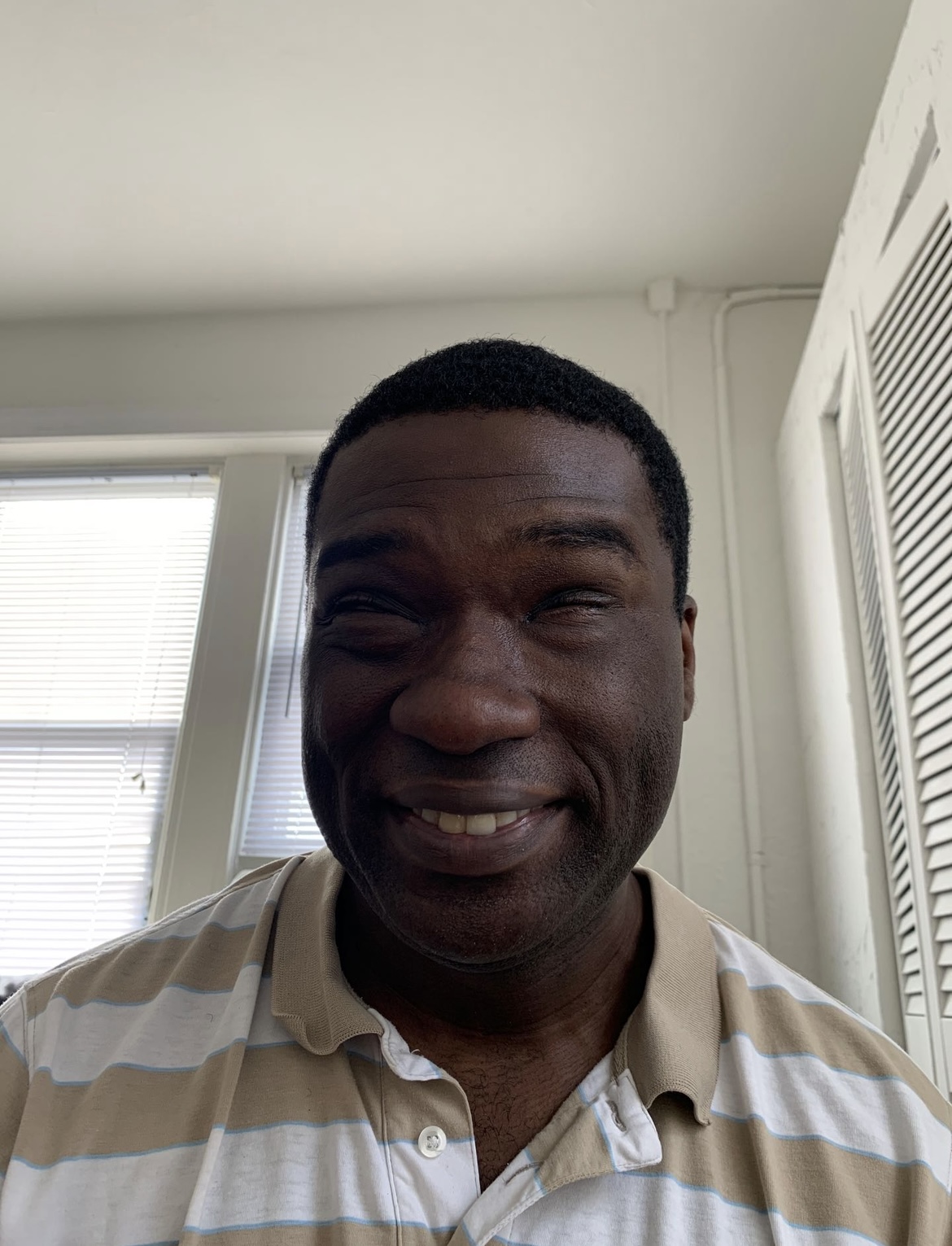
Dezman Jackson describes himself as someone who likes variety. As such, he has held positions in orientation and mobility, rehab teaching, youth programming, and now web accessibility at an educational technology company, with some teaching still on the side.
“I feel like I’m always doing things,” he said.
It is also what brought him to BISM in the first place. Fresh out of his master’s program at Louisiana Tech, he was back home in Alabama and keeping an eye on the East Coast.
“I wanted to check out the East Coast and just see what life is like in this part of the country,” he said. “Through professional networks, I got word that BISM was hiring a Youth Services Coordinator, so I took the opportunity.”
That was 2011. Over the years, he held a number of positions at BISM, but his time as the Youth Services Coordinator is still his favorite.
“The mentor program, and the summer training programs — just really fabulous for building upon young people,” he said. “Crazy weekends, hanging out with the youth, meeting different young people who were living as mentors. That was among my favorite for sure.”
When it came time to move on and explore technology, he did. But BISM stayed with him. When he was approached about joining the board, the answer came quickly.
“I thought, what a great opportunity to give back to an organization that gave me so much,” he said. “BISM let me spread my wings as a young professional. It was kind of a no-brainer.”
What he keeps coming back to is BISM’s fundamental orientation toward blind people, not as recipients of service, but as people capable of full, independent lives.
“A lot of organizations are like, ‘We’re here to serve you,'” he said. “BISM has more of a promotional attitude. It’s not the end, it’s the beginning. It’s a launchpad. So many other organizations, it’s like a revolving door. Here, we want people to use this as a launchpad and keep going forward.”
One memory in particular has stuck with him from his years on staff: a driving school that came out to BISM for a session with participants.
“It was good for blind people to know about driving, to know how it works, some of the rules of the road,” he said. “They brought these simulator cars, and we went around cones and got that whole experience that probably a lot of folks had never had.”
On the board, one of the initiatives he has been most invested in is BISM’s pursuit of certification as a Structured Discovery Center, a training methodology he knows well from his own background, and one he sees as a significant step for ITR.
“That’s been very exciting to work with the leadership and be involved in that process as we move closer and closer,” he said. He traveled with a group to Louisiana, where he received his own Structured Discovery training in tto observe the model firsthand. “I can’t think of a better place to go.”
Looking ahead, he said what excites him most is watching BISM think bigger.
“I love that we’re doing things on a national level, like the internship program — giving people anywhere an opportunity to really gain some skills,” he said. “There’s been a lot of talk about not just keeping our programs in-house but expanding out, doing a lot more outreach into parts of Maryland that are underserved in terms of blindness training. I love that BISM is open to new opportunities, in manufacturing, in everything, always looking to create valuable work and provide a valuable service.”