

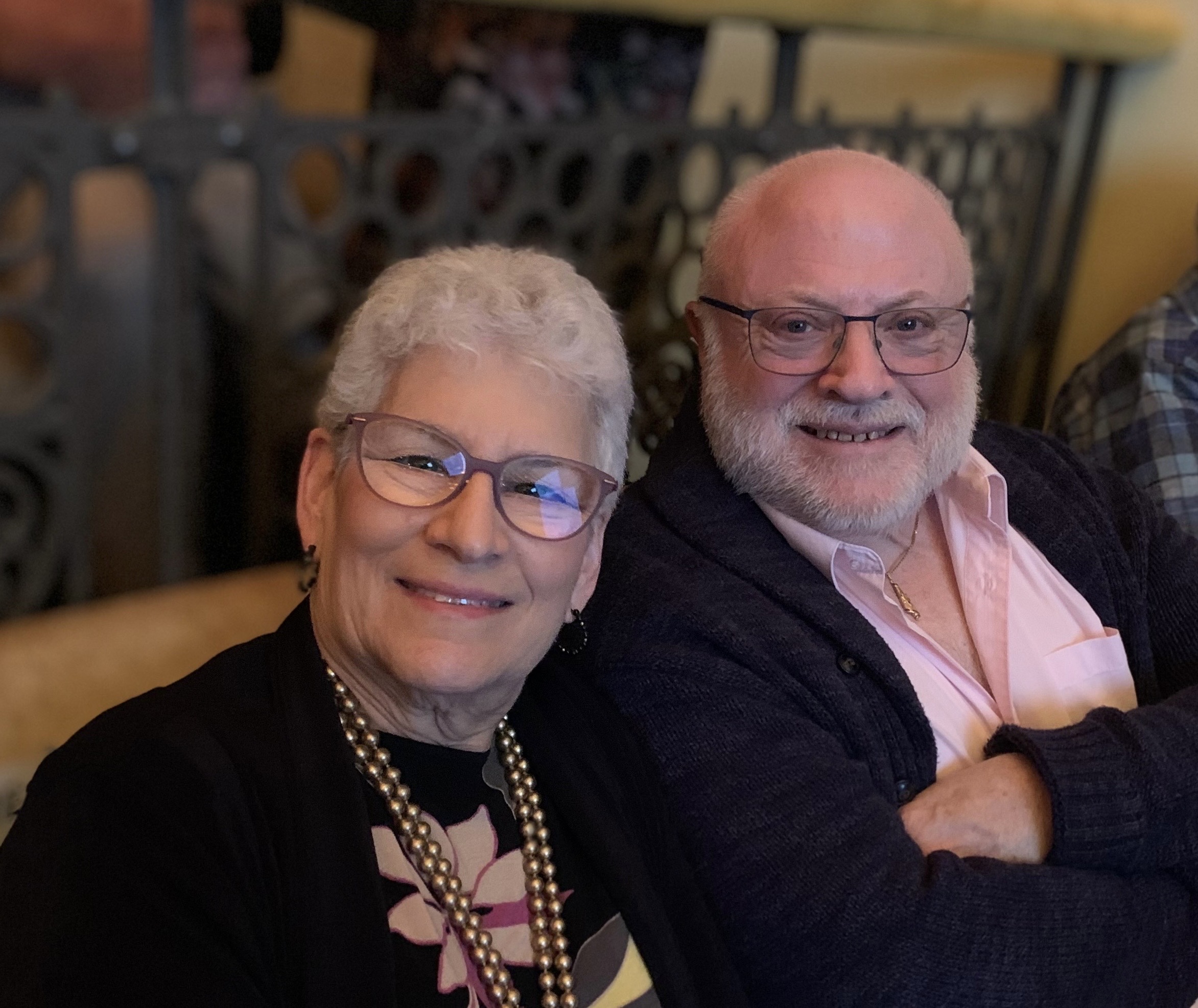
Board Member Spotlight: Sue Schaffer Vice Chair of the BISM Board of Trustees
For many people, blindness services come into focus at a turning point—a diagnosis, a moment of loss, a clear before and after. Sue Schaffer never had that moment.
“I’ve been legally blind since birth,” she said. “This is all I know.”
Growing up in Montgomery County in the 1960s, Sue navigated a world that wasn’t built for her—and did it largely without the tools that are now standard. No Braille instruction. No cane travel training. Just a seat at the front of the classroom, large print materials, and a magnifying glass.
Sue credits most of her success in the school system to her mother, who refused to let anyone, but her daughter set the ceiling.
When administrators pulled Sue from sewing class because they thought it was “too risky” for a blind girl to use scissors—her mother took her home and taught Sue herself.
Recognizing that not everyone had that type of fierce advocate in their corner, Sue went on to earn her master’s degree in career counseling and spent her career improving Maryland’s disability services system.
In 2004, she became the founding director of the Office of Blindness and Vision Services—a role that put her in direct partnership with BISM long before she joined its board.
“I’ve seen BISM from all sides,” she said. “I oversaw the grant. I worked there. And now I’m on the board.”
Today, Sue facilitates a vision support group for seniors in Silver Spring. The conversations are often heavy.
For many of the people she works with, the turning point of grappling with losing your vision is giving up the ability to drive.
Sue, however, never learned to drive. She never could.
“There were times as a teenager when everyone else was getting their license,” she said. “They could go wherever they wanted. And you couldn’t.”
Her role often involves helping people work through that loss. She’s sat across from people still driving with serious vision impairment—including one couple who explained, without irony, that they managed because between them they had “one good eye.”
“It’s a real grieving process,” she said. “Particularly when people lose the ability to drive, because that’s independence.”
In those moments, Sue offers a confident reassurance. She built a full life, a career, and a family without ever sitting behind a wheel. When she tells people that independence is still possible, she means it.
Sue has watched blindness services evolve over decades. She’s seen clients go from magnifying glasses and large-print materials to GPS navigation, screen readers, and specialized mobility training. She values every advancement. But she holds firm on one point: training must prepare people for the real world, not just ideal conditions.
“We want people to be able to go anywhere, eat anything, navigate any environment,” she said. “If we only train you for a specific set of conditions and those conditions change—then what are you going to do?”
Sue learned to navigate without structured training, adapting as she went, figuring it out. BISM’s job, as she sees it, is to give people those same instincts—but with much more support and intention behind them.
Many people come to blindness services asking, What now?
Sue’s life has always answered a different question: What’s next?